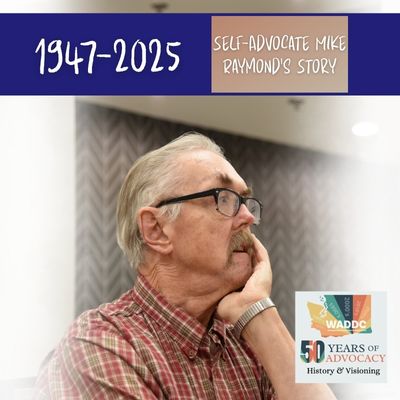
Mike Raymond’s journey from life inside Rainier School to becoming one of Washington’s most influential self-advocates helped shape the state’s disability rights movement and continues to guide efforts toward community-based supports today.
In 1990, federal education laws began strengthening the connection between school and work by requiring transition planning and expanding job training and work-based learning opportunities for students, including those with disabilities.
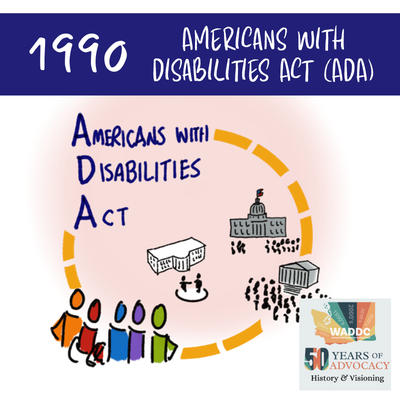
Passed in 1990, the Americans with Disabilities Act is a civil rights law that protects people with disabilities from discrimination and supports equal access to work, services, and public spaces.
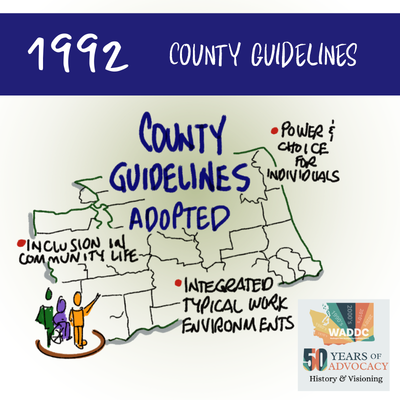
In 1992, Washington State’s Developmental Disabilities Administration (now DDCS) adopted the County Guidelines, establishing core values and responsibilities to support community inclusion, choice, and integrated employment for people with developmental disabilities.
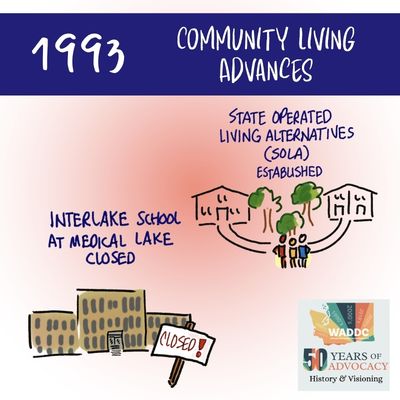
In 1993, Washington State took concrete steps toward community living by deciding to close Interlake School and continuing to expand small, community-based homes to support people with developmental disabilities.
In 1995, Washington passed Senate Bill 5800 to require that savings from changes in the developmental disabilities program be reinvested in community-based services for people with developmental disabilities.
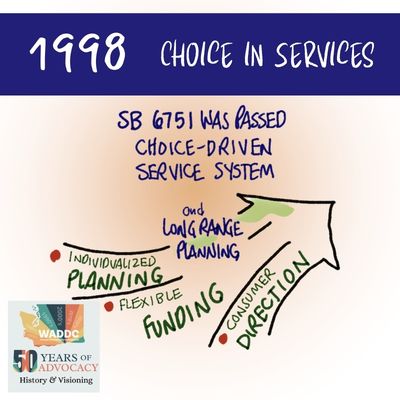
In 1998, Senate Bill 6751 affirmed Washington’s commitment to choice in living and service options for people with developmental disabilities and began a strategic planning process to assess and improve services statewide.
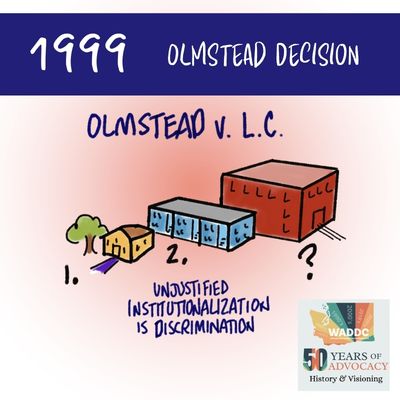
In 1999, a Supreme Court decision called Olmstead v. L.C. confirmed that people with disabilities have the right to receive services in their communities instead of institutions when appropriate.
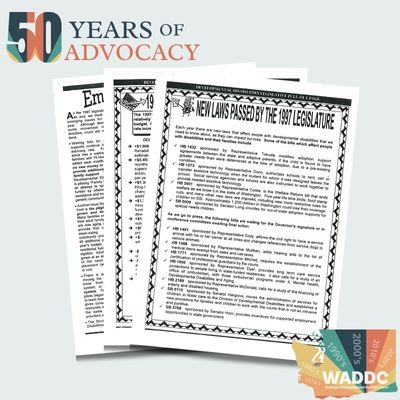
In 1999, Senate Bill 5693 created a public-private Developmental Disabilities Endowment Trust Fund in Washington to combine state and private contributions and help support lifelong care and planning for people with developmental disabilities.
In 1999, Disability Rights Washington and The Arc of Washington State led major lawsuits—Allen v. Western State Hospital and a challenge to caps on Medicaid waiver services—that exposed gaps in care and helped shape disability services and accountability in Washington.
This agenda outlines the May 21, 1999 meeting of the Developmental Disabilities Council’s Planning & Public Policy Committee, covering legislative updates, budget review, policy decisions, and preparation for upcoming Council work.
A timeline from ITACC traces how the DD Act evolved from 1970 to 2000 into a comprehensive civil rights and community-living framework centered on inclusion, self-determination, and strong advocacy roles for DD Councils.
Robert Wardell recounts his experience living in two of Washington State's residential habilitation centers (also known as RHC's or institutions) and his journey to living in the community. He also shares some tips for advocacy and his hope for future IDD advocates.
Diana reflects on decades of work in Washington’s disability community, sharing how listening to self-advocates and learning from people who experienced institutions helped drive progress toward true community inclusion.