DDC History and Visioning

Policy

1985 AFSCME Report on Deinstitutionalization
A 1985 AFSCME publication reprints investigative reporting on the dangers and systemic failures that accompanied rapid, under-resourced deinstitutionalization in Ohio, highlighting its impact on people with developmental disabilities.
1970's Report on Institutions
A 1970-era Washington State planning report identifies deficiencies in institutional care and outlines a coordinated strategy to improve facilities, update laws, and expand community-based services for people with developmental disabilities.
1974 Memo on Institutions
A 1974 Washington State memo outlines the planning, data collection, and community coordination needed to shift services from large institutions to community-based programs for people with developmental disabilities, mental health needs, and justice-involved youth.
1979 Deinstitutionalization Lawsuit
A 1979 AFSCME complaint and accompanying federal guidelines reveal significant concerns about Rhode Island’s failure to provide required job protections for employees affected by deinstitutionalization, prompting calls for stronger state and federal enforcement.
1978 Public Law 94-142
A 1978 review of P.L. 94-142 outlines the administrative responsibilities states assumed to implement special education services and protect children’s rights under the new federal law.
1979 Education for All Executive Summary on Progress
The inaugural Congressional report on P.L. 94-142 shows major early gains in providing special education services nationwide, alongside the challenges states faced as they built the systems needed to meet the law’s promise.
1960s: Exposing the Abuse of Civil Rights
In the 1960s, national exposure of civil rights abuses in institutions—including Willowbrook, Pennhurst, and the documentation in Christmas in Purgatory—helped launch the modern disability rights movement.
Video Interview Diana Stadden
Diana reflects on her decades of work in Washington’s disability community, including supporting Advocacy Days and the Self Advocates in Leadership (SAIL) program. She shares why listening to self-advocates is essential, how stories from people who lived in institutions shaped change, and the progress she’s seen in moving toward true community inclusion.
1976 Education for All
Together, these 1976 documents outline federal expectations, implementation steps, advocacy roles, and legislative context for the Education for All Handicapped Children Act as states prepared to ensure every child with a disability received a free, appropriate public education.
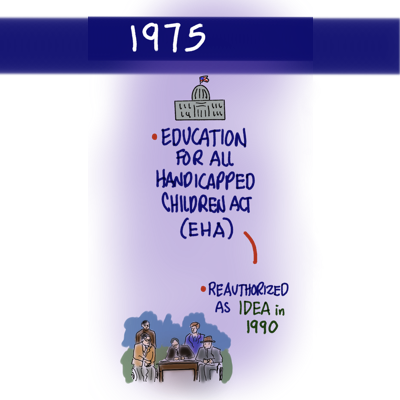
1975 Education for All Public Law
This document provides congressional history, committee explanations, and statutory language related to federal legislation on the education of children with disabilities, detailing the intent, requirements, and protections included in the law.
1971 Proposed Legislation Education for All
This document explains Washington’s early efforts in 1970–71 to expand educational services for children with disabilities, including new requirements for school districts, guidance for identifying and serving students, and advocacy efforts under “Education for All.”
1971 OSPI Steering Committee
These minutes outline a 1971 Steering Committee meeting focused on organizing Washington’s implementation of mandatory education for children with disabilities and establishing the ad hoc committees needed to guide policy, eligibility, program standards, and oversight.
1999 DDC Packet - May
This agenda outlines the May 21, 1999 meeting of the Developmental Disabilities Council’s Planning & Public Policy Committee, covering legislative updates, budget review, policy decisions, and preparation for upcoming Council work.
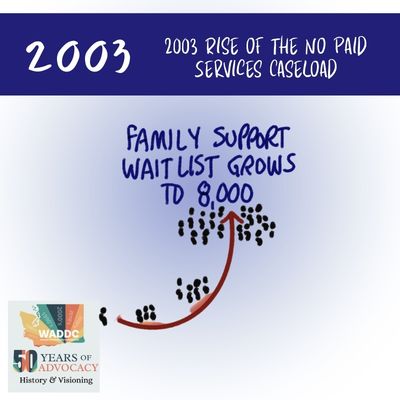
1970's No Paid Services Caseload
State officials in 1970 discuss the large number of unserved children with disabilities in Washington and propose a meeting to identify the scope of the issue, current gaps, and possible solutions.
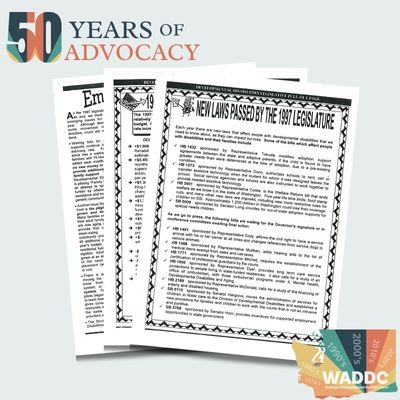
1997 Legislative Bills Passed
Washington’s 1997 legislature expanded supports and funding for people with developmental disabilities and their families.
View the full archive