DDC History and Visioning

Issues

Issues

This section of the History and Visioning Project brings together historical documents, interviews, articles, and stories that explore key issues affecting people with intellectual and developmental disabilities in Washington State. The materials reflect how concerns, priorities, and challenges have changed over time, and how people with IDD, families, and advocates have worked to address them. Together, these resources provide context for understanding ongoing issues and how past experiences continue to shape today’s conversations and future directions.

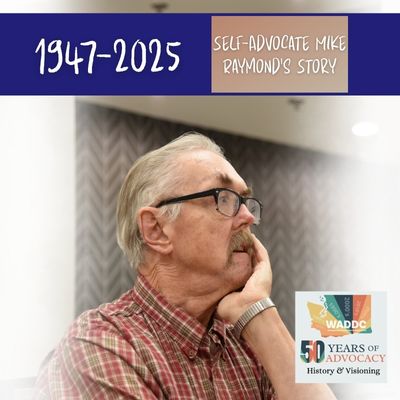
1945-2025: Self-Advocate Mike Raymond's Story
Mike Raymond’s journey from life inside Rainier School to becoming one of Washington’s most influential self-advocates helped shape the state’s disability rights movement and continues to guide efforts toward community-based supports today.
1960s: Exposing the Abuse of Civil Rights
In the 1960s, national exposure of civil rights abuses in institutions—including Willowbrook, Pennhurst, and the documentation in Christmas in Purgatory—helped launch the modern disability rights movement.
1976 Editorial on Special Education
This 1976 article describes how special education programs in Washington pioneered accountability systems—using clear goals, measurable objectives, and progress tracking—that later influenced broader public school practices.
1976 Education for All
Together, these 1976 documents outline federal expectations, implementation steps, advocacy roles, and legislative context for the Education for All Handicapped Children Act as states prepared to ensure every child with a disability received a free, appropriate public education.
1979 Deinstitutionalization Lawsuit
A 1979 AFSCME complaint and accompanying federal guidelines reveal significant concerns about Rhode Island’s failure to provide required job protections for employees affected by deinstitutionalization, prompting calls for stronger state and federal enforcement.
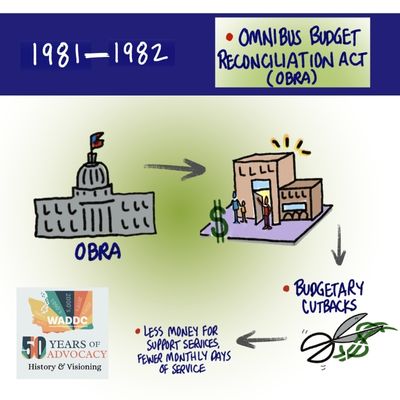
1981 Omnibus Budget Reconciliation Act (OBRA)
The 1981 Omnibus Budget Reconciliation Act changed Social Security disability rules in ways that made benefits harder to qualify for and reduced protections for people with disabilities — including those with intellectual and developmental disabilities.
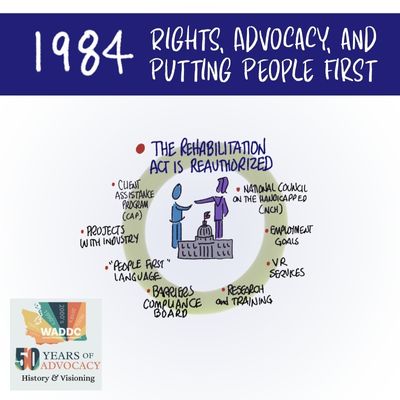
1984: Rights, Advocacy, and Putting People First
In the early 1980s, changes to federal disability policy strengthened self-advocacy, accountability, and people-first values, helping shift services toward individual rights, independence, and full participation in community life.
1985 AFSCME Report on Deinstitutionalization
A 1985 AFSCME publication reprints investigative reporting on the dangers and systemic failures that accompanied rapid, under-resourced deinstitutionalization in Ohio, highlighting its impact on people with developmental disabilities.
1985 Victims of Change
A 1985 investigative series examines the human and system impacts of rapid deinstitutionalization when community supports and oversight were insufficient.
1987-1988: From Institutions to Community Living
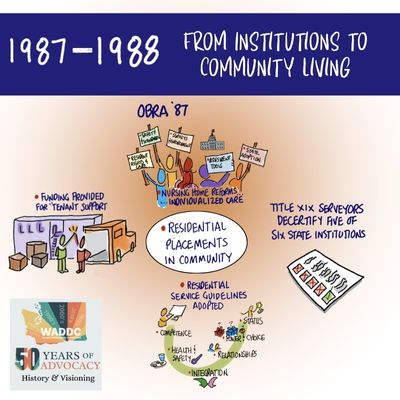
In 1987–1988, Washington State accelerated its shift from institutions to community living after federal decertification exposed serious failures in institutional care, leading to expanded community supports and new Residential Services Guidelines shaped with input from the Developmental Disabilities Council and people with lived experience.
1988 Values, Policies, and Practices: Closing the Gaps in Community Integration
A 1988 paper explores the progress and remaining challenges of community integration for people with developmental disabilities, emphasizing values-based policy and meaningful inclusion.
1990: Bridging School and Work
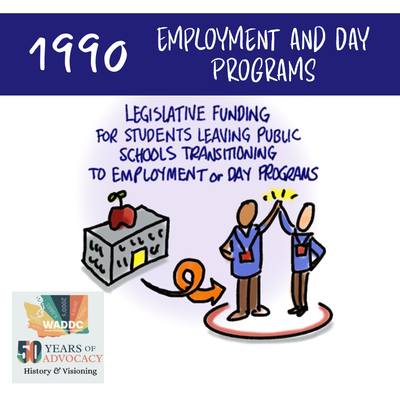
In 1990, federal education laws began strengthening the connection between school and work by requiring transition planning and expanding job training and work-based learning opportunities for students, including those with disabilities.
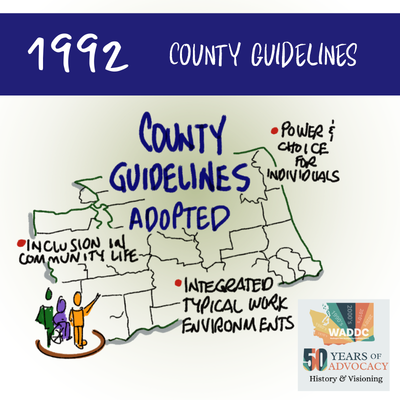
1992: County Guidelines adopted
In 1992, Washington State’s Developmental Disabilities Administration (now DDCS) adopted the County Guidelines, establishing core values and responsibilities to support community inclusion, choice, and integrated employment for people with developmental disabilities.
1995: Redirecting Savings to Community Services
In 1995, Washington passed Senate Bill 5800 to require that savings from changes in the developmental disabilities program be reinvested in community-based services for people with developmental disabilities.
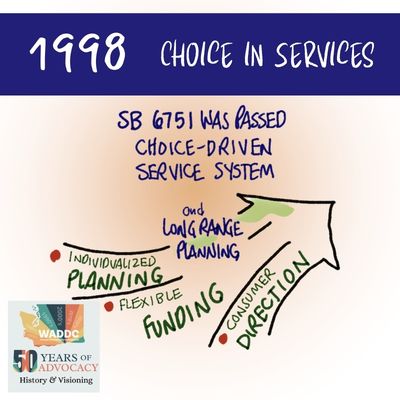
1998: Choice in Services
In 1998, Senate Bill 6751 affirmed Washington’s commitment to choice in living and service options for people with developmental disabilities and began a strategic planning process to assess and improve services statewide.
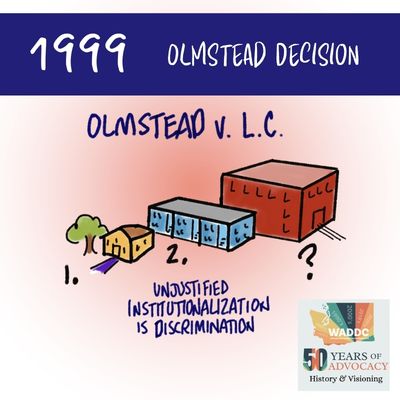
1999: The Olmstead Decision
In 1999, a Supreme Court decision called Olmstead v. L.C. confirmed that people with disabilities have the right to receive services in their communities instead of institutions when appropriate.
1999 DDC Packet - May
This agenda outlines the May 21, 1999 meeting of the Developmental Disabilities Council’s Planning & Public Policy Committee, covering legislative updates, budget review, policy decisions, and preparation for upcoming Council work.
Video Interview - Robert Wardell
Robert Wardell recounts his experience living in two of Washington State's residential habilitation centers (also known as RHC's or institutions) and his journey to living in the community. He also shares some tips for advocacy and his hope for future IDD advocates.
Video Interview Diana Stadden
Diana reflects on decades of work in Washington’s disability community, sharing how listening to self-advocates and learning from people who experienced institutions helped drive progress toward true community inclusion.
Back to the full archive