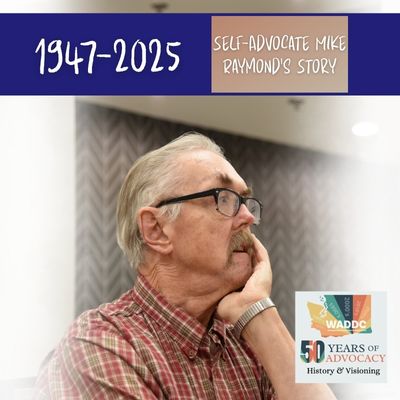
Mike Raymond’s journey from life inside Rainier School to becoming one of Washington’s most influential self-advocates helped shape the state’s disability rights movement and continues to guide efforts toward community-based supports today.
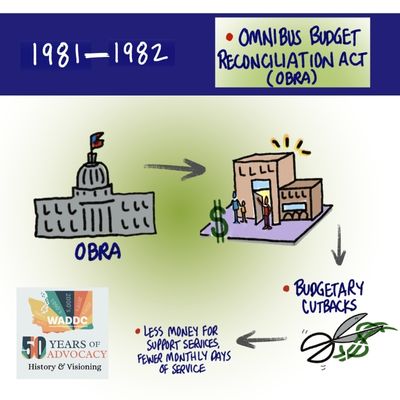
The 1981 Omnibus Budget Reconciliation Act changed Social Security disability rules in ways that made benefits harder to qualify for and reduced protections for people with disabilities — including those with intellectual and developmental disabilities.
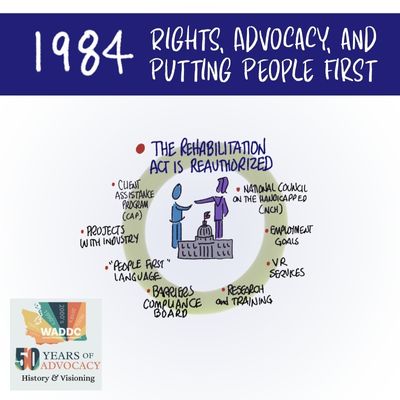
In the early 1980s, changes to federal disability policy strengthened self-advocacy, accountability, and people-first values, helping shift services toward individual rights, independence, and full participation in community life.
A 1985 AFSCME publication reprints investigative reporting on the dangers and systemic failures that accompanied rapid, under-resourced deinstitutionalization in Ohio, highlighting its impact on people with developmental disabilities.
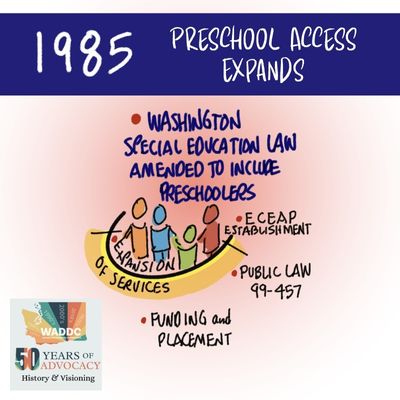
By the mid-1980s, Washington State led the way in early childhood inclusion by expanding special education to preschoolers and strengthening early learning supports, helping establish early intervention as a foundation for inclusion and lifelong learning.
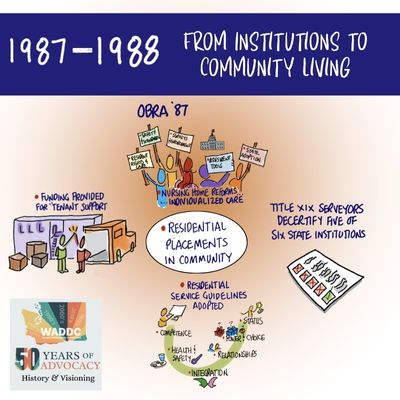
In 1987–1988, Washington State accelerated its shift from institutions to community living after federal decertification exposed serious failures in institutional care, leading to expanded community supports and new Residential Services Guidelines shaped with input from the Developmental Disabilities Council and people with lived experience.
A summary of Washington State legislation from 1983–1988 shows major advances in family support, employment, civil rights, and community services for people with developmental disabilities.
A timeline from ITACC traces how the DD Act evolved from 1970 to 2000 into a comprehensive civil rights and community-living framework centered on inclusion, self-determination, and strong advocacy roles for DD Councils.
Robert Wardell recounts his experience living in two of Washington State's residential habilitation centers (also known as RHC's or institutions) and his journey to living in the community. He also shares some tips for advocacy and his hope for future IDD advocates.
Diana reflects on decades of work in Washington’s disability community, sharing how listening to self-advocates and learning from people who experienced institutions helped drive progress toward true community inclusion.