DDC History and Visioning

2000's

2000's

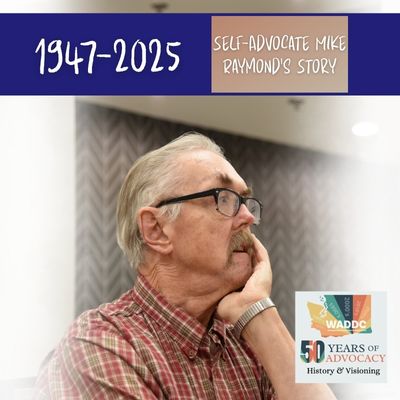
1945-2025: Self-Advocate Mike Raymond's Story
Mike Raymond’s journey from life inside Rainier School to becoming one of Washington’s most influential self-advocates helped shape the state’s disability rights movement and continues to guide efforts toward community-based supports today.
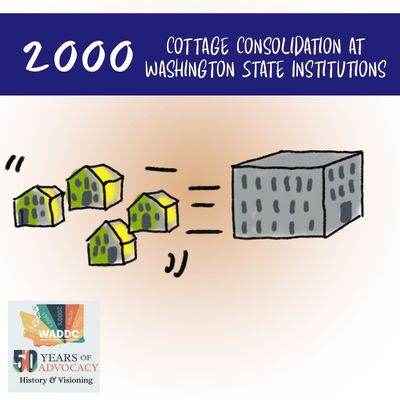
2000–2003 Cottage Consolidation at Washington State Institutions
Between 2000 and 2003, Washington State consolidated cottages at its institutions as part of a phased shift toward community-based services following the Olmstead decision.
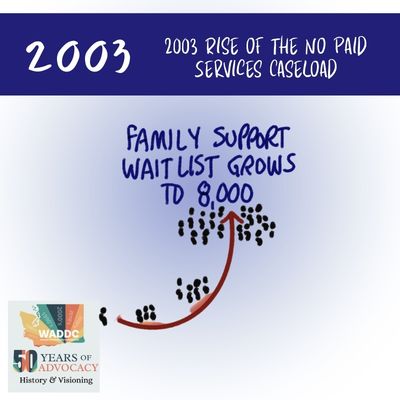
2003 Rise of the No Paid Services Caseload
In 2003, Washington’s Family Support waitlist grew to approximately 8,000 families, highlighting rising demand for community services and laying the groundwork for today’s No Paid Services caseload.
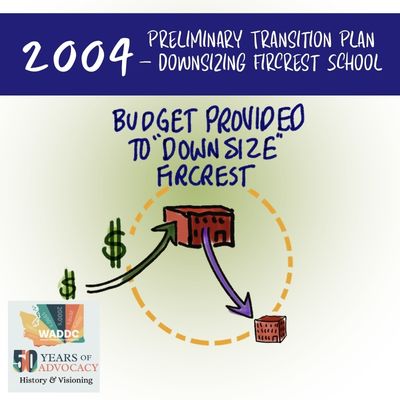
2004: Preliminary Transition Plan to Downsize Fircrest School
In 2004 Washington State developed a plan to downsize and close Fircrest School, and in 2005 the phase-out was temporarily halted for legislative study amid statewide debate over institutional and community services.
2005: Dan Thompson Memorial Account Established
In 2005, Washington State created the Dan Thompson Developmental Disabilities Community Services Account to expand community-based supports.
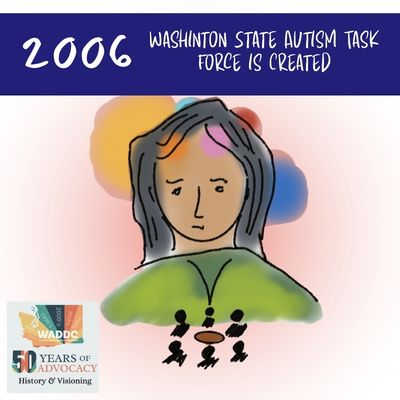
2006: Creation of the Washington State Autism Task Force
In 2006, Washington State created the Autism Task Force to study service gaps and recommend improvements to supports for individuals with autism and their families.
2006: The Working Age Adult Policy (WAAP) is Implemented
In 2006, Washington implemented the Working Age Adult Policy to prioritize integrated, community-based employment as the primary service outcome for working-age adults with developmental disabilities.
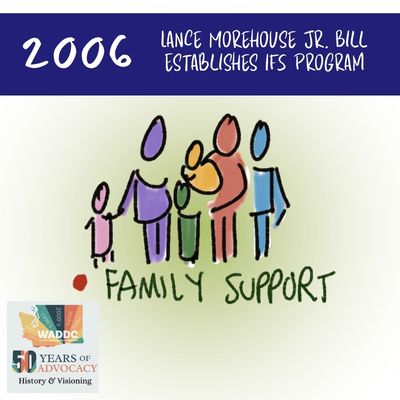
2006 Lance Morehouse Jr. Bill, IFS Program Established in State Law
In 2006, the Lance Morehouse Jr. Bill established the Individual and Family Services program in state law, consolidating multiple family support programs into a more unified system.
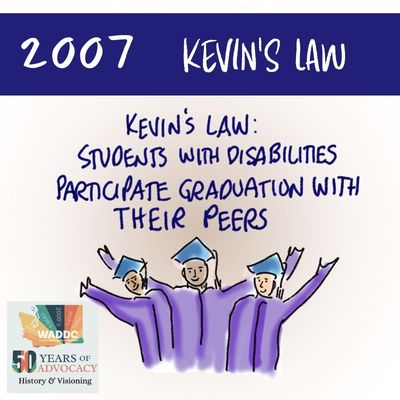
2007 Kevin’s Law — Graduation Participation for Students with Disabilities
In 2007, Kevin’s Law ensured that students with disabilities could participate in graduation ceremonies with their peers while continuing to receive services and work toward a diploma.
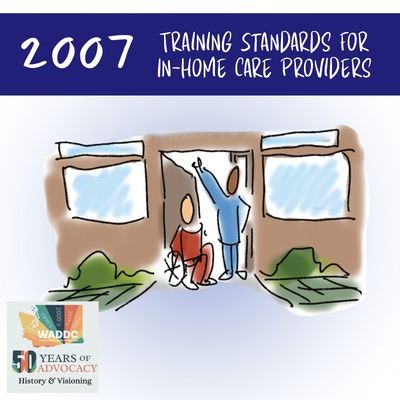
2007: Training Standards for In-Home Care Providers
In 2007, Washington strengthened and standardized training requirements for in-home care providers, improving quality and consistency in community-based services.
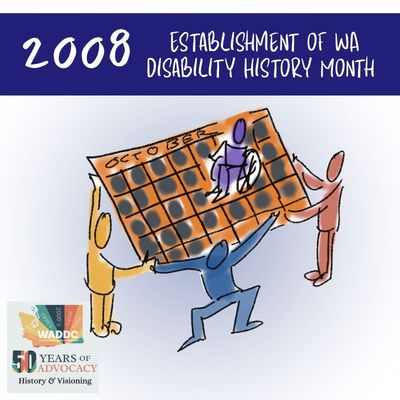
2008: Establishment of Disability History Month in Washington State
In 2008, Washington State established October as Disability History Month in public schools and required instruction that promotes awareness, understanding, and inclusion.
2009 Recognizing Siblings and Grandparents as Caregivers
By 2009, siblings and grandparents serving as primary caregivers were increasingly recognized in policy and practice as eligible for respite and support services.
2009: Modernizing Disability Language in State Law
In 2009, Washington State began updating its statutes to replace outdated terminology with “intellectual disability,” reflecting a broader shift toward respectful, person-centered language.
2009 Study of Institutional Closures
In 2009, Washington legislators directed the Office of Financial Management to study the feasibility of closing state institutions as part of ongoing system reform discussions.
2009 Expanding Access to Children’s Mental Health Services
In 2009, federal and state actions strengthened efforts to provide more equitable access to mental health services for children, reinforcing parity and Medicaid coverage requirements.
1970-2000 National DD Council History
A timeline from ITACC traces how the DD Act evolved from 1970 to 2000 into a comprehensive civil rights and community-living framework centered on inclusion, self-determination, and strong advocacy roles for DD Councils.
Video Interview - Robert Wardell
Robert Wardell recounts his experience living in two of Washington State's residential habilitation centers (also known as RHC's or institutions) and his journey to living in the community. He also shares some tips for advocacy and his hope for future IDD advocates.
Video Interview Diana Stadden
Diana reflects on decades of work in Washington’s disability community, sharing how listening to self-advocates and learning from people who experienced institutions helped drive progress toward true community inclusion.
Video Interview - Shawn Latham
Shawn Latham shares his perspective on disability advocacy and systems change. He talks about his own lived experience, his involvement with disability organizations, and what it has meant to be part of advocacy work over time.
Video Interview - Ivanova Smith
Ivanova Smith shares lived experience growing up in institutional and segregated systems, a journey through special education in Washington, and work advancing disability rights.
Video Interview - Noah Seidel
In this interview, Noah Seidel reflects on how growing up with a lifelong disability led him from campus advocacy at the University of Washington into statewide disability policy work. He discusses his role in advancing legislation, strengthening client rights protections, and building self-advocacy networks across Washington and beyond.
Back to the full archive