A 1957 IRS ruling confirms The ARC of Washington’s federal tax-exempt status and outlines the benefits, limitations, and reporting requirements tied to its 501(c)(3) designation.
In the 1960s, national exposure of civil rights abuses in institutions—including Willowbrook, Pennhurst, and the documentation in Christmas in Purgatory—helped launch the modern disability rights movement.
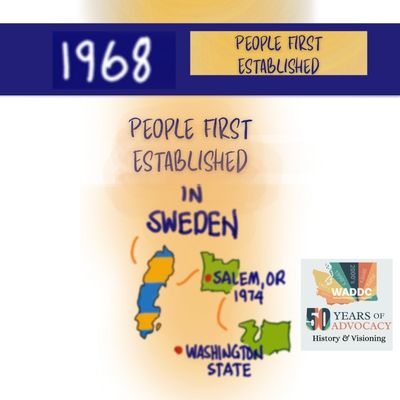
The People First movement began in the late 1960s when people with intellectual and developmental disabilities organized to speak for themselves, shaping a powerful self-advocacy movement that emphasized choice, leadership, and the belief that people are more important than labels.
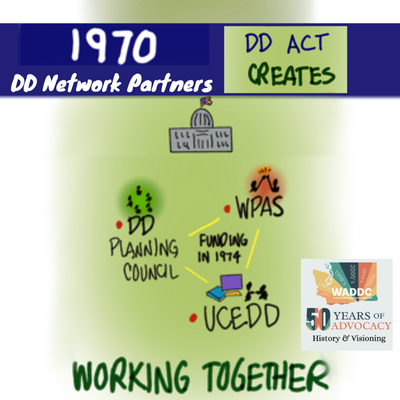
Through the DD Act, the federal government established DD Councils and a national network dedicated to strengthening disability rights, promoting community living, and ensuring that people with developmental disabilities guide decisions that affect their lives.
Washington’s governor formally established the state’s Developmental Disabilities Planning Council in 1976, defining its membership, responsibilities, and federal compliance requirements under Public Law 94-103.
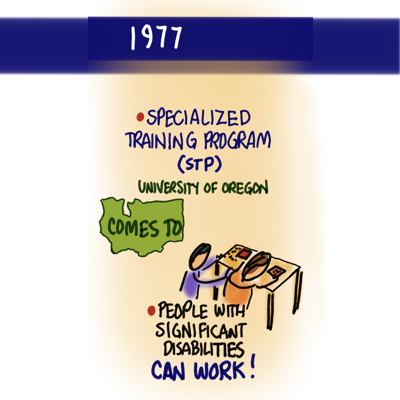
The Specialized Training Program at the University of Oregon helped expand access to meaningful work and shaped a generation of leaders who built lasting disability services in Washington State.
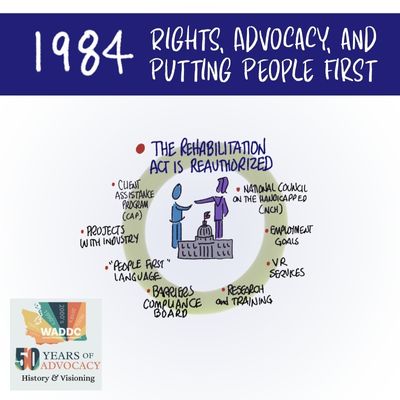
In the early 1980s, changes to federal disability policy strengthened self-advocacy, accountability, and people-first values, helping shift services toward individual rights, independence, and full participation in community life.
By the mid-1980s, Washington State led the way in early childhood inclusion by expanding special education to preschoolers and strengthening early learning supports, helping establish early intervention as a foundation for inclusion and lifelong learning.
A timeline from ITACC traces how the DD Act evolved from 1970 to 2000 into a comprehensive civil rights and community-living framework centered on inclusion, self-determination, and strong advocacy roles for DD Councils.